

Modal
High-performance AI infrastructure for developers
Modal offers advanced AI infrastructure, enabling rapid deployment, scaling, and performance for machine learning workloads with a developer-friendly experience.
What is Modal?
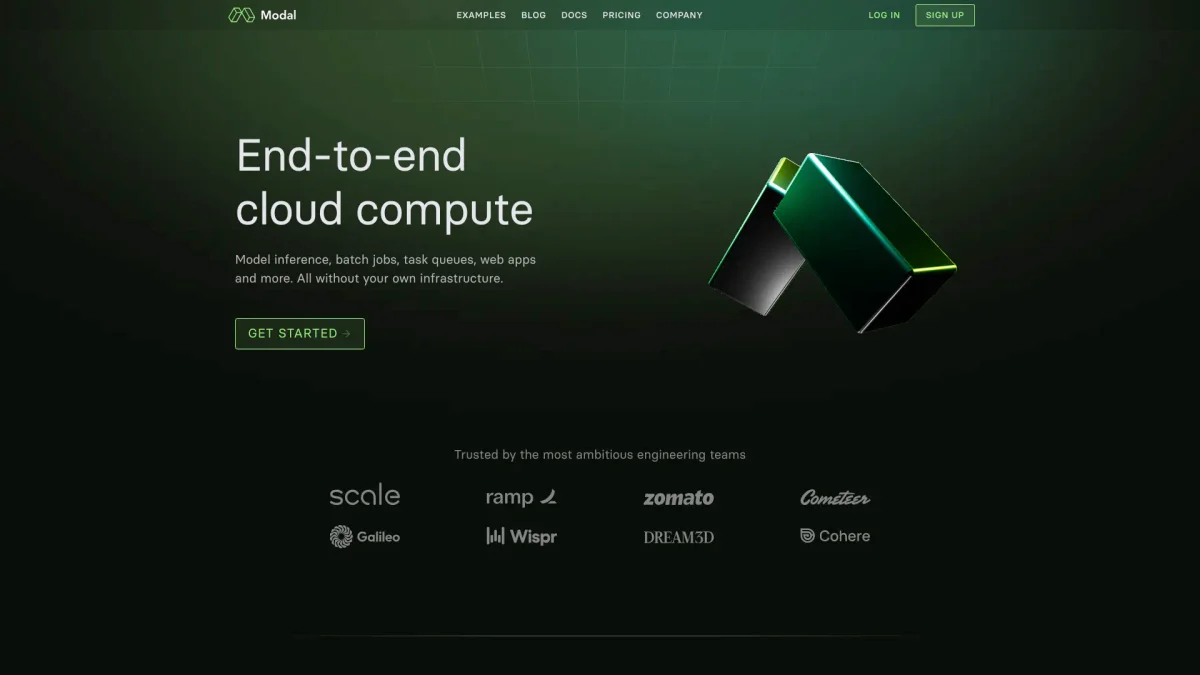
Modal is a high-performance AI infrastructure platform designed to help developers efficiently train, deploy, and scale machine learning models. Its primary purpose is to streamline the development process by providing robust tools for inference, training, and batch processing, all while ensuring low latency and quick response times. Modal addresses the common challenges faced by AI teams, such as slow deployment and scaling issues, effectively improving productivity. Key benefits of Modal include instant autoscaling, sub-second cold starts, and a seamless developer experience that mimics local environments. It allows users to define infrastructure in code without the need for complex configuration files, ensuring alignment between environment and hardware requirements. With elastic GPU scaling and unified observability, Modal empowers teams to build scalable applications quickly and reliably, making it an essential tool for any AI-focused organization.
Key Features
- Sub-second cold starts for quick responsiveness
- Instant autoscaling for dynamic workloads
- Elastic GPU capacity across multiple clouds
- Unified observability with integrated logging
- Programmable infrastructure defined in code
- High-performance AI-native runtime
- Built-in globally distributed storage
Who is it for?
- AI development teams
- Machine learning engineers
- Data scientists
- DevOps professionals
- Tech startups
Use Cases
1. Efficient Model Training
Teams can fine-tune open-source models on single or multi-node clusters instantly using Modal, dramatically reducing the time required for model training while ensuring scalability.
2. Real-time Inference Deployment
Deploy and scale inference for large language models and other AI applications seamlessly. Modal's performance allows for low-latency responses, crucial for real-time applications.
3. Batch Processing Workloads
Scale to thousands of containers for batch workloads on demand. Modal's infrastructure supports handling large volumes of data efficiently, ideal for data-heavy tasks.
4. Collaborative Data Analysis
Utilize shareable notebooks to collaborate on code and data in real-time. This feature enables teams to work together effectively, sharing insights and findings instantly.
5. Secure Sandboxes for Untrusted Code
Modal allows for programmatically scaling secure, ephemeral environments for running untrusted code, ensuring safety while encouraging experimentation and innovation.
Pricing Plans
Pricing information not available on website. Please visit the official website for current pricing.
Frequently Asked Questions
1. What types of workloads can I run on Modal?
Modal supports various workloads including inference for LLMs, audio, image/video generation, and batch processing. It is designed to handle any machine learning task efficiently.
2. How does Modal handle scaling for AI applications?
Modal provides elastic GPU scaling, allowing users to access thousands of GPUs across multiple clouds without the need for reservations or quotas, scaling back to zero when not in use.
3. Is there a community for Modal users?
Yes, Modal has a developer community where users can connect, share insights, and get support through platforms like Slack, enhancing collaboration and knowledge sharing.
4. What security measures does Modal implement?
Modal ensures security through battle-tested isolation techniques and compliance with SOC2 and HIPAA standards, along with data residency controls to protect sensitive information.
Modal Reviews & Ratings
Real user feedback and ratings for Modal. See what the community thinks about this AI tool.
No reviews yet
Be the first to share your experience with Modal