
Refraction
AI-powered code generation and improvement
Refraction leverages AI to help developers detect bugs, refactor code, and generate documentation efficiently across multiple programming languages.
What is Refraction?
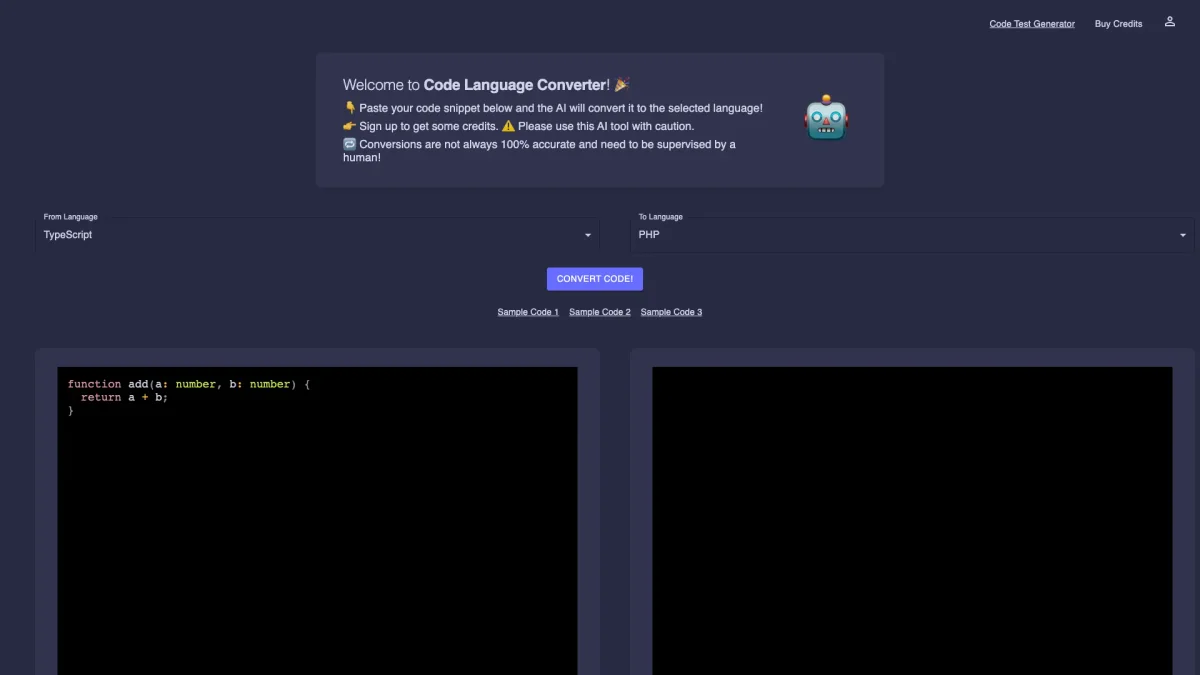
Refraction is an innovative AI tool designed for developers, aimed at enhancing coding efficiency through automation. Its primary purpose is to assist with a variety of coding tasks, such as detecting bugs, converting code between languages, and generating unit tests. By simplifying the coding process, Refraction helps developers focus on more complex problems while streamlining everyday coding challenges. The key benefits of using Refraction include increased productivity and reduced manual effort. By automating repetitive tasks like code refactoring and documentation creation, users can save time and ensure higher code quality. Developers can leverage Refraction’s extensive feature set to improve their code, learn new programming concepts, and generate necessary components effortlessly, making it an essential tool in any developer's toolkit.
Key Features
- Detect and fix bugs
- Convert code between languages
- Generate unit tests automatically
- Create comprehensive documentation
- Refactor code for modern practices
- Add inline debug statements
- Generate SQL queries and regexes
Who is it for?
- Software developers
- Code reviewers
- Technical authors
- DevOps engineers
- System architects
Use Cases
1. Automated Unit Test Generation
Developers can use Refraction to automatically generate unit tests for their codebase, ensuring comprehensive test coverage and simplifying the testing process. This saves time and helps maintain code quality.
2. Code Refactoring for Modern Practices
With Refraction, developers can refactor outdated code to adopt modern practices. The AI suggests improvements, making it easier to maintain high-quality code in evolving projects.
3. Documentation Creation
Refraction assists in creating inline documentation, making code easier to understand for future developers. This feature enhances collaboration and code maintainability within teams.
4. Cross-Language Code Conversion
Refraction enables developers to convert code from one programming language to another seamlessly. This is particularly useful for teams working in multi-language environments or migrating legacy systems.
Pricing Plans
Free: Basic tools with no hidden fees, Pro: Pricing information not available on website. Please visit the official website for current pricing.
Frequently Asked Questions
1. What programming languages does Refraction support?
Refraction supports code generation and improvement in 56 languages, including Python, JavaScript, Java, C++, and many more, making it versatile for various projects.
2. Can I use Refraction for commercial projects?
Yes, Refraction is suitable for commercial projects as well as personal projects, helping developers enhance their coding workflow in any professional setting.
3. Does Refraction provide real-time code suggestions?
Refraction offers various features that analyze your code and provide suggestions for improvements, bug fixes, and more, although it does not specify real-time capabilities.
4. Is there a limit to the code size I can input?
As of the latest update, Refraction has raised the token limit from 3000 to 8000, allowing users to input larger blocks of code for analysis and generation.
Refraction Reviews & Ratings
Real user feedback and ratings for Refraction. See what the community thinks about this AI tool.
No reviews yet
Be the first to share your experience with Refraction