

Deepnote
Collaborative data science and analytics platform
Deepnote empowers data professionals with a collaborative, open-source platform for analytics, data science, and machine learning, enhancing productivity and teamwork.
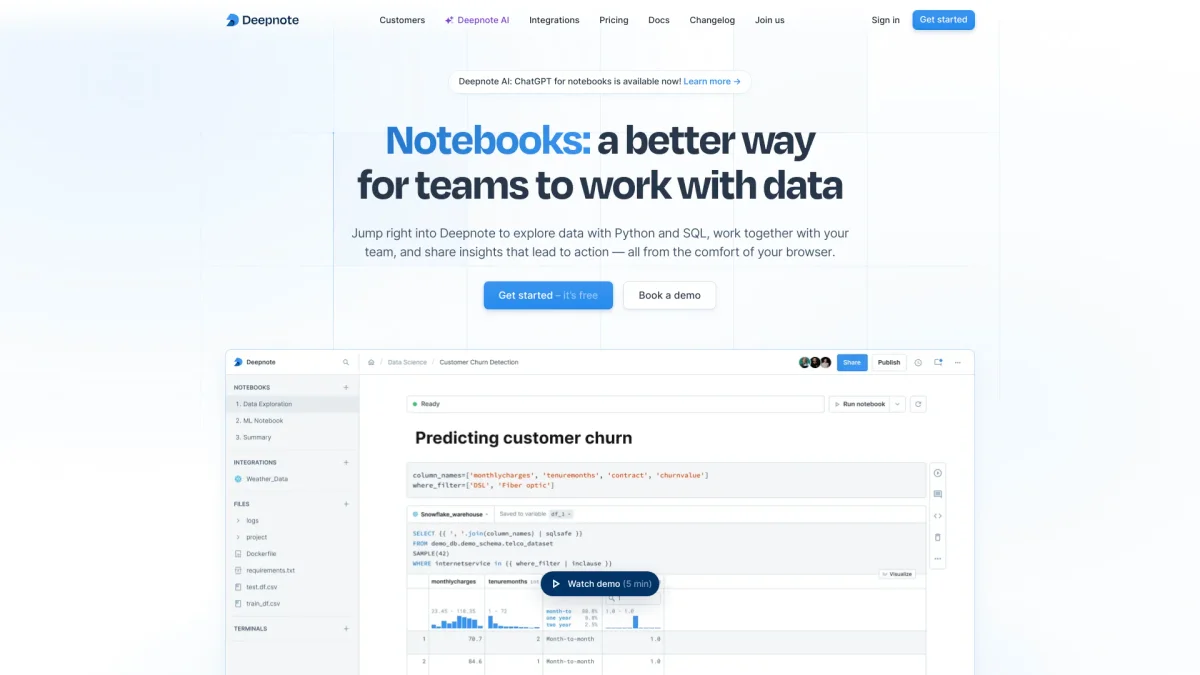
What is Deepnote?
Deepnote is a collaborative analytics and data science notebook designed to streamline the data analysis process for teams. Its primary purpose is to bridge the gap between data professionals and their data, enabling users to perform complex analyses, build data apps and dashboards, and share insights effortlessly. By providing a single platform that supports Python, SQL, and R, Deepnote addresses the challenges of collaboration and data management within teams. Key benefits of Deepnote include its powerful integration capabilities with various data sources, advanced analytics features, and an intuitive user interface that fosters teamwork. Users can enhance productivity through automated querying and analysis, create visually appealing reports, and schedule tasks seamlessly. With robust security measures and compliance with standards like SOC2 and HIPAA, Deepnote ensures a secure environment for data-driven decision-making across industries, making it an essential tool for data professionals.
Key Features
- Open-source collaborative environment
- Integration with 100+ data sources
- Real-time collaboration and commenting
- Automated querying and analysis
- Data visualization without coding
- Supports Python, SQL, and R
- Robust security and compliance measures
Who is it for?
- Data analysts and scientists
- Business intelligence professionals
- Fintech and finance teams
- Biotechnology researchers
- Enterprise data teams
Use Cases
1. Building Interactive Dashboards
Create stunning dashboards that visualize data insights in real-time. Deepnote allows users to connect to various data sources, manipulate data, and present findings interactively, making it easier for teams to monitor key metrics.
2. Data Transformation and ETL Pipelines
Utilize Deepnote to set up efficient ETL pipelines for data transformation. Users can automate the extraction, transformation, and loading of data into their preferred formats, improving workflow efficiency and data quality.
3. Model Training and Monitoring
Train machine learning models directly within Deepnote. Users can leverage powerful GPUs for quick processing, monitor model performance, and serve predictions, all while collaborating with their team in real-time.
4. Sharing Insights and Reporting
Easily share analytical reports and insights with stakeholders. Deepnote enables users to send links or invites for collaborative reviews, ensuring everyone is aligned and can provide feedback instantly.
Pricing Plans
Pricing information not available on website. Please visit the official website for current pricing.
Frequently Asked Questions
1. What types of data sources does Deepnote support?
Deepnote supports integration with over 100 data sources, including Snowflake, BigQuery, and various databases, allowing users to work with diverse datasets easily.
2. Is Deepnote suitable for educational purposes?
Yes, Deepnote is designed for use in educational settings, providing tools that facilitate collaborative learning and data analysis, making it ideal for students and educators.
3. What security measures does Deepnote implement?
Deepnote ensures data security through encryption, compliance with HIPAA and SOC2, and features like role-based access control (RBAC) and single sign-on (SSO) for secure user management.
4. Can I automate tasks in Deepnote?
Absolutely! Users can schedule notebooks to run at specified intervals, automating data analyses and reports, which enhances productivity and ensures timely insights.
Deepnote Reviews & Ratings
Real user feedback and ratings for Deepnote. See what the community thinks about this AI tool.
No reviews yet
Be the first to share your experience with Deepnote